
About us
About Varanasi
Varanasi, also known as Kashi or Banaras, is one of the world’s oldest living cities and the spiritual heart of India, located along the sacred banks of the River Ganga in Uttar Pradesh. Revered as the “city of salvation,” Varanasi holds immense religious significance for Hindus, Buddhists, and Jains, drawing millions of pilgrims who come to bathe in the holy waters, perform rituals, and seek blessings at the iconic Kashi Vishwanath Temple. The city’s timeless ghats, such as Dashashwamedh and Manikarnika, echo with chants, hymns, and vibrant Ganga Aarti ceremonies that illuminate the evenings with divine energy. Beyond spirituality, Varanasi is a treasure of culture, history, art, and education, known for its classical music traditions, Banarasi silk sarees, philosophy, yoga, Ayurveda, and its prestigious Banaras Hindu University. Its narrow lanes bustle with life, offering sacred shrines, bustling bazaars, street food flavors, and centuries-old heritage that reflect the soul of India. A journey to Varanasi is not just a visit to a city, but an experience of faith, culture, life, and eternity woven together in a deeply spiritual atmosphere.
Ganga Aarti (Dashashwamedh Ghat & Assi Ghat)
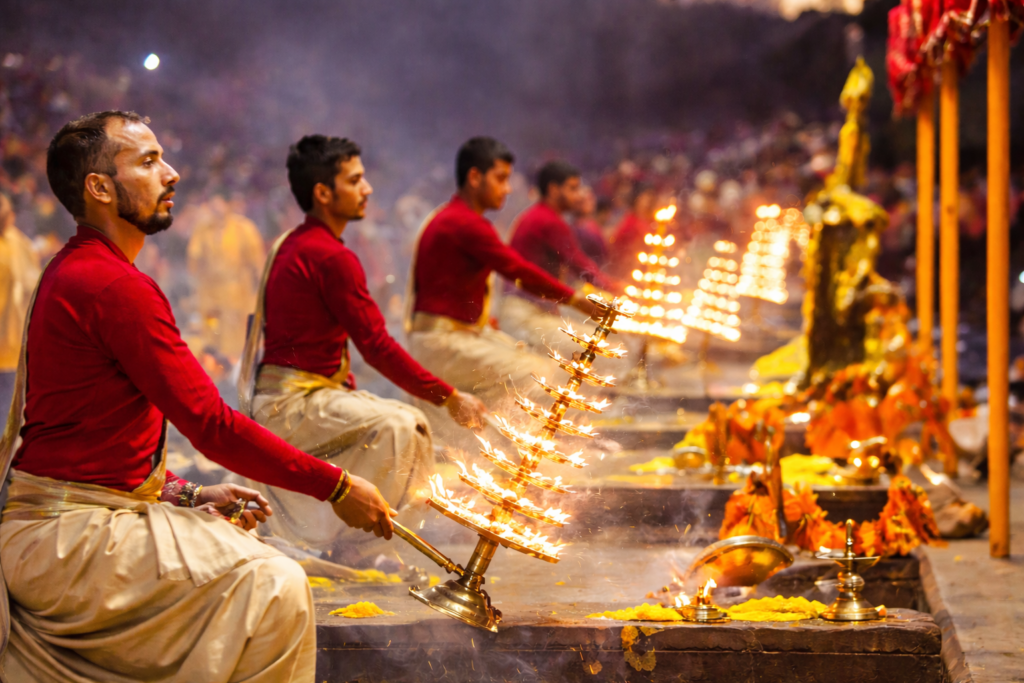
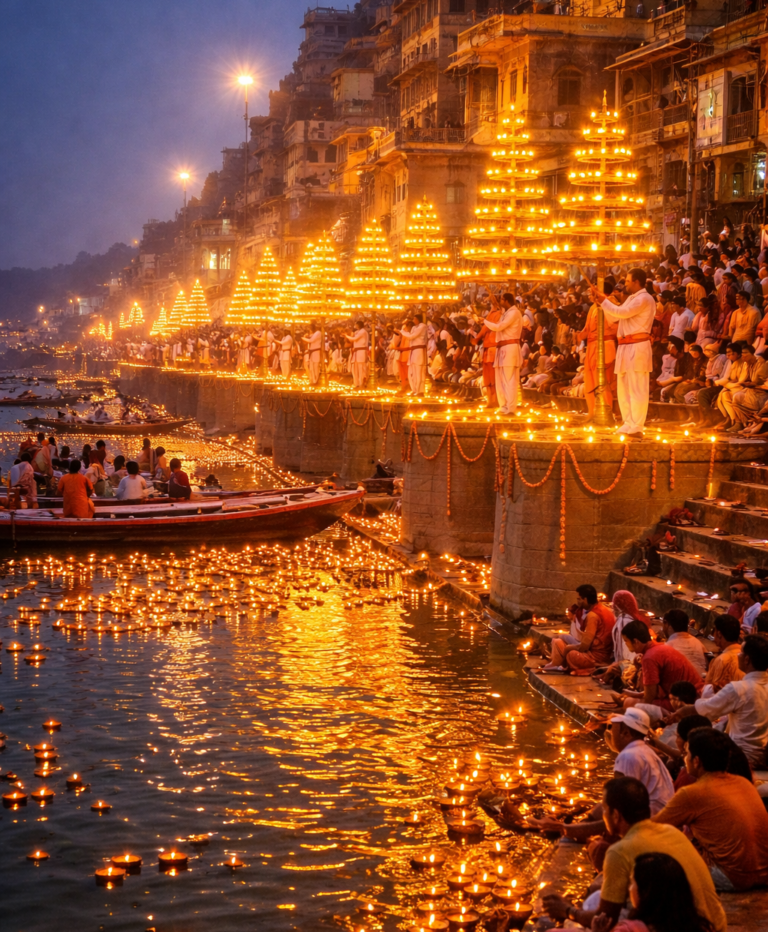
The Ganga Aarti in Varanasi is one of the most sacred and mesmerizing rituals performed every evening on the ghats of the River Ganga, primarily at Dashashwamedh Ghat. As the sun sets, priests dressed in traditional attire perform a beautifully synchronized ceremony using large brass lamps, incense, conch shells, and sacred chants. The ritual is dedicated to Goddess Ganga, symbolizing gratitude, devotion, and the spiritual connection between the river and the people.T he ceremony, filling the atmosphere with divine energy, the sound of bells, hymns, and the glowing light of flames reflecting over the river. Devotees often light diyas and let float on the creating a breathtaking sight. The Ganga Aarti represents faith, heritage, and the timeless spiritual essence of Varanasi, making it an unforgettable experience for everyone who witnesses it.What makes the Ganga Aarti even more special is the deep emotion and belief attached to it. People from all walks of life—saints, pilgrims, locals, travelers, and tourists—stand together in silence, devotion,
Holy River Ganga & Sacred Ghats
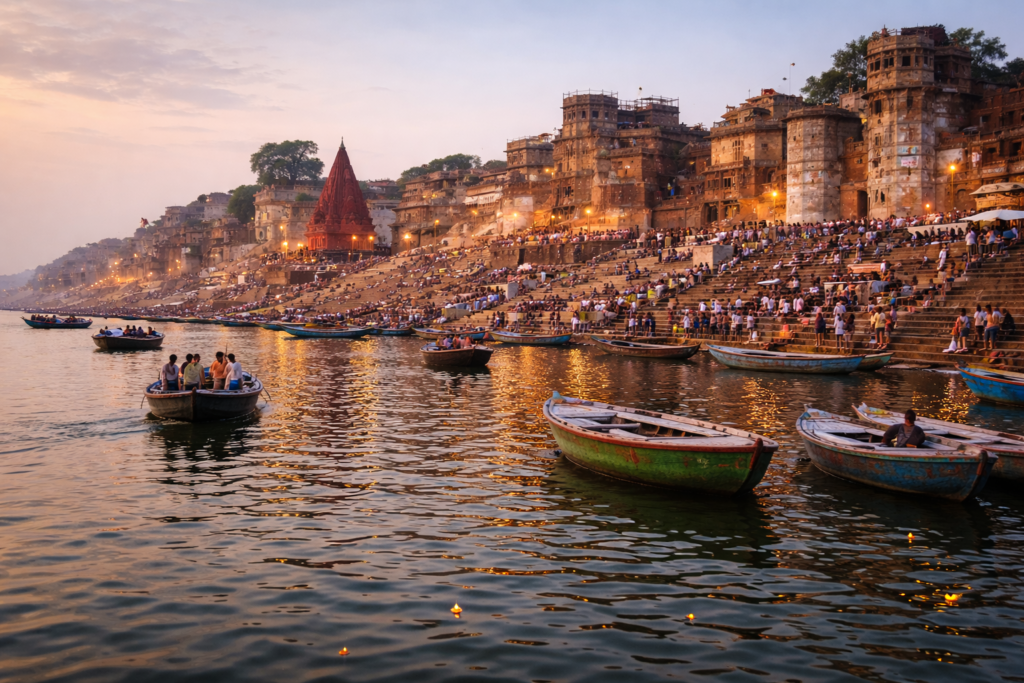
The Holy River Ganga in Varanasi represents faith, spirituality, and the eternal rhythm of life. This breathtaking reality scene captures the true essence of the ghats, where thousands gather every day to pray, bathe, meditate, and seek blessings. The ancient steps along the river are filled with devotees, priests, pilgrims, and travelers from around the world, each experiencing the sacred energy of this spiritual city. Boats gently float on the calm waters, offering peaceful rides and divine views of the illuminated ghats. As the evening approaches, the golden light reflects beautifully on the river, creating a magical glow that enhances the serene atmosphere. The air is filled with the sound of chanting, bells, conch shells, and prayers, making the environment deeply soulful and uplifting. Surrounded by centuries-old architecture, vibrant traditions, and pure devotion, the River Ganga in Varanasi stands as a symbol of purity, hope, faith, and the timeless connection between life, culture, and spirituality.
Sunrise & Sunset Boat Rides
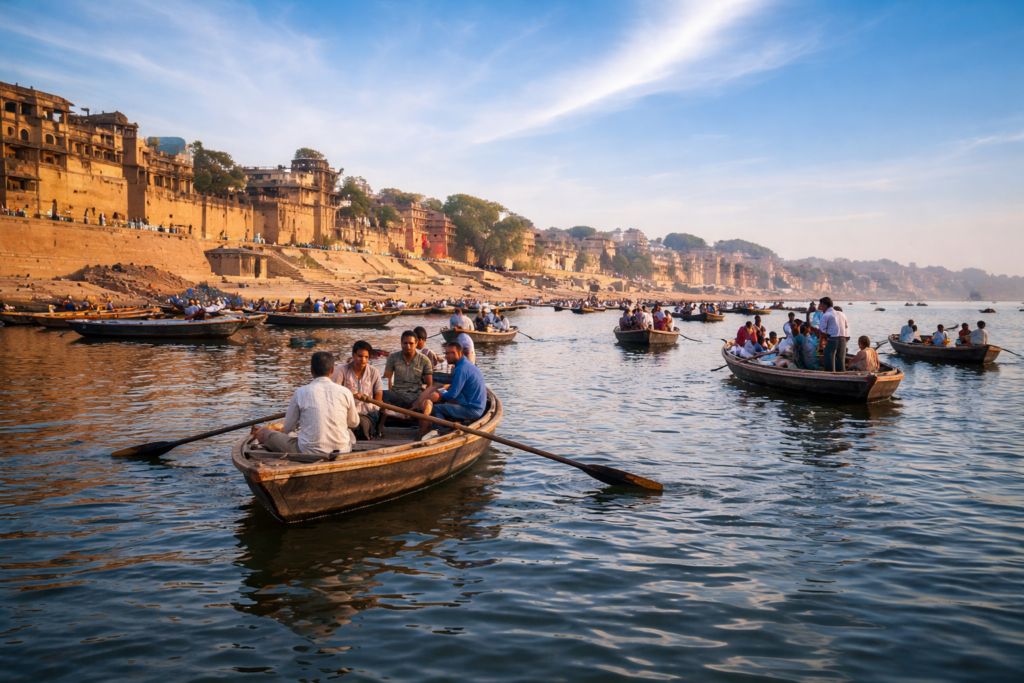
Sunrise and sunset boat rides on the Holy River Ganga are among the most magical and peaceful experiences in Varanasi. During sunrise, the city awakens with chants, temple bells, and the soft golden glow of the rising sun reflecting over the calm waters. As the boat gently sails across the river, you can witness priests performing morning rituals, devotees taking holy dips, and the ghats slowly coming to life, creating a serene and spiritual atmosphere. It is a moment where nature, faith, and culture beautifully blend together.During sunset, the experience becomes even more enchanting as the sky turns orange and pink, and the city lights begin to sparkle along the ghats. The river reflects the glowing lamps and rituals happening along the banks, especially near the Ganga Aarti area, offering a breathtaking visual treat. The gentle breeze, rhythmic sound of the water, and the stunning panoramic view of ancient temples, architecture, and lively ghats make the ride.
Kashi Vishwanath Temple
The Kashi Vishwanath Temple is one of the most revered and sacred temples in India, dedicated to Lord Shiva. Located in the heart of Varanasi, it is one of the twelve Jyotirlingas, making it spiritually significant for millions of devotees. The temple symbolizes faith, devotion, and the belief in salvation (Moksha), as many Hindus believe that a visit here grants liberation from the cycle of life and death.The temple’s stunning architecture, golden domes, and sacred sanctum create a deeply divine atmosphere. Devotees from across the world visit to offer prayers, perform rituals, and seek blessings, especially during festivals like Maha Shivaratri. Surrounded by narrow ancient lanes, vibrant marketplaces, and continuous chants of “Har Har Mahadev,” the temple radiates powerful spiritual energy. Whether for religious devotion, cultural experience, or inner peace, Kashi Vishwanath Temple stands as the soul and pride of Varanasi, preserving centuries of tradition, faith, and divine heritage.
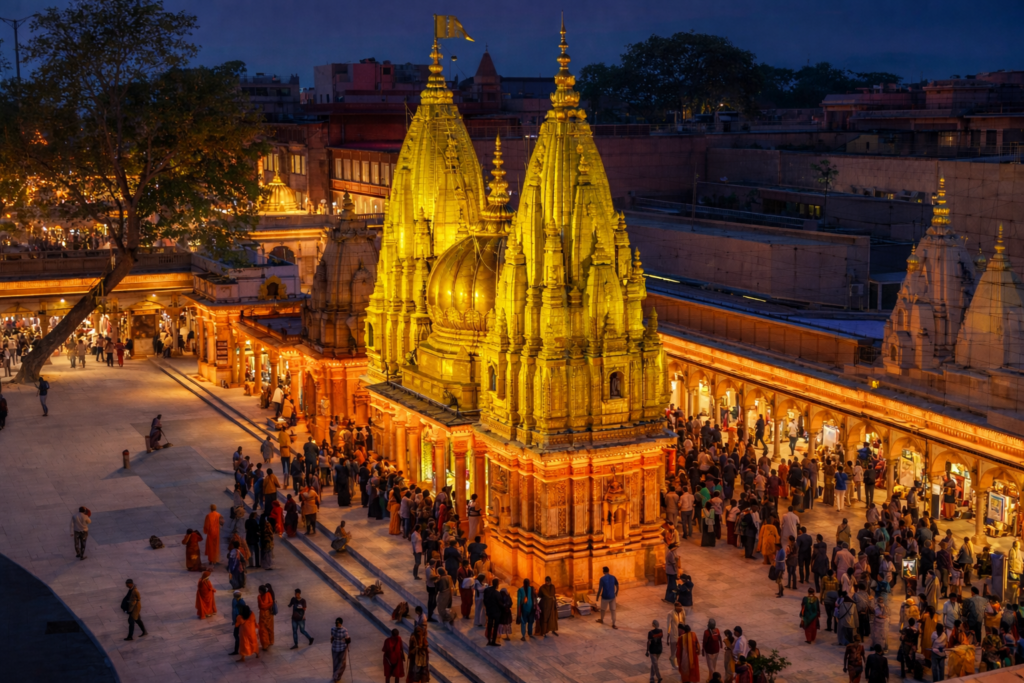
GLANCE OF VARANASI
Area
Population
Spoken Language
Hindi, Bhojpuri, Urdu, English
Revenue
Culture, Festivals, and Lifestyle of Varanasi
Varanasi is widely celebrated as the City of Festivals, where every occasion is infused with deep spirituality, vibrant culture, and centuries-old traditions that continue to thrive in daily life. Festivals here are not just events—they are grand spiritual expressions that unite faith, devotion, music, rituals, and celebration. During major festivals, the ghats glow with countless oil lamps, the River Ganga reflects shimmering golden lights, temples echo with sacred chants, and the entire city becomes a magnificent stage of devotion. The most enchanting spectacle is Dev Deepawali, when millions of diyas illuminate the ghats, creating a heavenly sight that attracts devotees and travelers from across the world. Diwali, Ganga Mahotsav, and Mahashivratri are celebrated with immense reverence through elaborate rituals, cultural performances, temple processions, devotional music, and fireworks. Festivals like Holi, Buddha Purnima, Nag Nathaiya, Ram Navami, Chhath Puja, and Makar Sankranti highlight the city’s religious diversity and cultural richness. Throughout these celebrations, traditional dance, classical music, local folklore, and community gatherings bring people together in joy and devotion. Even the daily Ganga Aarti at Dashashwamedh and Assi Ghats feels like a festival, with synchronized rituals, glowing lamps, chanting priests, and thousands of devotees witnessing this divine ceremony every evening. Together, these celebrations reflect the timeless spiritual energy, cultural vibrancy, and eternal soul of Varanasi, making it one of the most spiritually alive cities in the world.
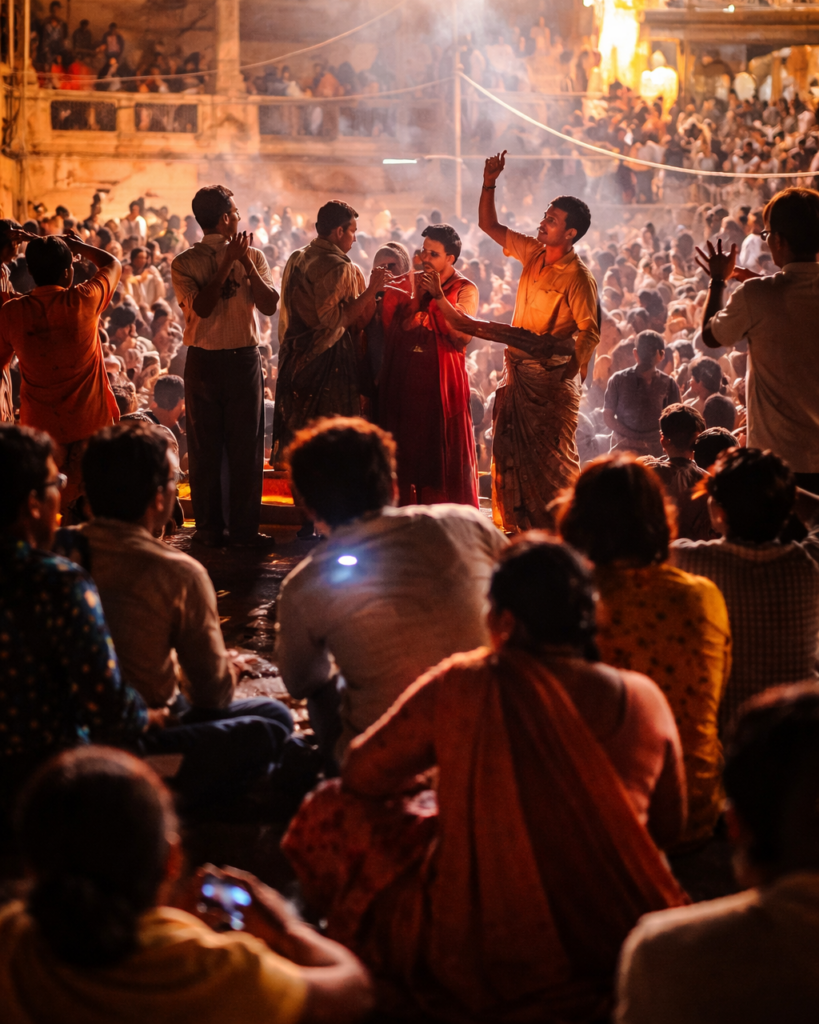
Varanasi’s lifestyle is deeply rooted in spirituality, simplicity, and tradition, yet beautifully blends with the rhythm of modern life. The day in Varanasi often begins with the sunrise over the Ganga, where locals and pilgrims gather for holy baths, prayers, yoga, and meditation, creating an atmosphere of peace and devotion. The narrow lanes bustle with life, filled with temples, local shops, tea stalls, and street vendors selling flowers, idols, sweets, and traditional items. Conversations flow easily here, as the people of Varanasi are known for their warmth, hospitality, and joyful spirit. The city’s lifestyle is also enriched by its strong connection to art, music, and culture—classical music performances, spiritual chants, literature, and age-old craftsmanship, especially Banarasi silk weaving, continue to thrive and shape daily living.Evening life centers around the ghats, where locals, students, travelers, and devotees gather to witness the mesmerizing Ganga Aarti, enjoy peaceful boat rides, or simply sit by the river, reflecting and relaxing. The street food culture of Varanasi adds another delightful layer to its lifestyle, with famous treats like kachori-sabzi, chaat, malaiyyo, and the iconic Banarasi paan offering a unique taste of the city’s culinary heritage. Religious ceremonies, cultural gatherings, and festivals constantly bring people together, filling everyday life with color, devotion, and joy. Despite growing urban development, educational institutions, and modern facilities, Varanasi has gracefully preserved its ancient charm, traditions, and spiritual essence. Life here moves at its own pace—calm yet vibrant, devotional yet lively—offering a lifestyle that is soulful, culturally rich, emotionally connected.
Culture & Community
The culture and community of Varanasi reflect the soul of India—deeply spiritual, emotionally rich, culturally vibrant, and rooted in thousands of years of tradition. Life here revolves around faith, rituals, and the sacred River Ganga, which is not just a water body but a lifeline that connects people spiritually and culturally. The community is bound together by shared beliefs, daily practices, and age-old customs that continue to thrive in every corner of the city. Temples, ghats, and spiritual centers serve as the heart of social life, where people gather not only to worship but to connect, share stories, exchange ideas, and celebrate life. The people of Varanasi are known for their warmth, hospitality, simplicity, and a unique sense of humor that adds charm to their interactions.Varanasi is also a cradle of art, music, and learning, home to classical musicians, scholars, philosophers, priests, artisans, and storytellers who contribute to its strong cultural identity. Banarasi silk weavers, wood craftsmen, metal workers, and traditional artists keep centuries-old crafts alive, while literature, Sanskrit learning, yoga, and Ayurveda flourish as integral parts of life. The community celebrates countless festivals together, reinforcing bonds of unity and devotion. Despite modernization, Varanasi has preserved its cultural roots, where tradition and modernity coexist harmoniously. In Varanasi, culture is not confined to monuments or rituals—it lives in the people, in their faith, in their music, in their art, and in their everyday way of life, making the city a timeless symbol of cultural heritage and community spirit.
FAQ – Frequently Asked Questions
1. Where is Varanasi located?
Varanasi is located in the state of Uttar Pradesh, India, on the banks of the sacred River Ganga.
2. Why is Varanasi famous?
Varanasi is famous for its spirituality, ancient temples, sacred ghats, Ganga Aarti, Banarasi silk sarees, culture, and as one of the world’s oldest continuously inhabited cities.
3. What is the best time to visit Varanasi?
The best time to visit is between October to March, when the weather is pleasant. Major festivals like Dev Deepawali and Mahashivratri also attract many visitors.
4. What are the main attractions in Varanasi?
Key attractions include Kashi Vishwanath Temple, Dashashwamedh Ghat, Assi Ghat, Manikarnika Ghat, Ganga Aarti, Sarnath, and boat rides on the Ganga.
5. What is special about the Ganga Aarti?
The Ganga Aarti is a daily evening ritual performed with lamps, chants, music, and devotion on the ghats, especially at Dashashwamedh Ghat. It is a mesmerizing spiritual experience.
6. Is Varanasi safe for tourists?
Yes, Varanasi is generally safe for tourists. However, like any busy destination, it is advised to take normal travel precautions.
7. What is the nearest airport to Varanasi?
The nearest airport is Lal Bahadur Shastri International Airport (VNS), located about 25 km from the city.
8. What food is Varanasi famous for?
Varanasi is famous for kachori-sabzi, chaat, lassi, sweets, malaiyyo (seasonal), and the iconic Banarasi paan.